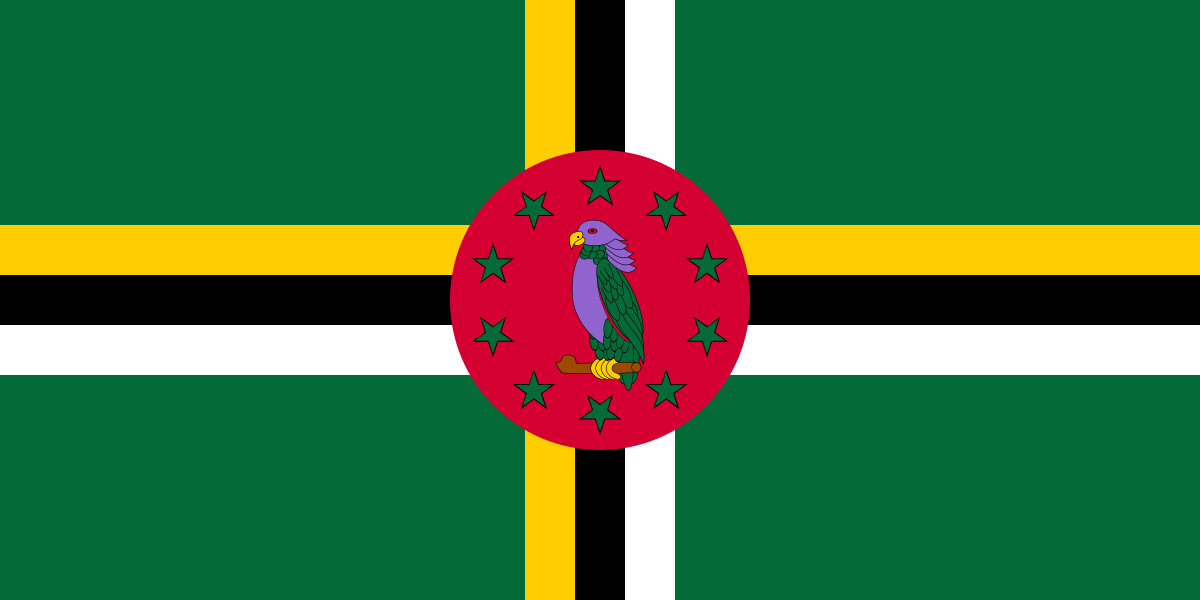
Dominica
Dominica
- Capital
- Roseau
- Population
- 71,991
- Region
- Americas
- Languages
- English
Dominica is home to one of the largest hydrothermal boiling lakes in the world, which is a flooded fumarole that continuously churns with grayish-blue bubbling water. This natural wonder is heated by molten magma beneath the earth's surface and often remains shrouded in a thick cloud of vapor. The island's rugged volcanic landscape is so pristine and densely forested that it is frequently referred to as the 'Nature Isle of the Caribbean.' It was famously the last island in the region to be colonized due to the fierce resistance of the indigenous Kalinago people.
Currency
The official currency is the East Caribbean Dollar, identified by the ISO code XCD. It is shared by seven other island nations and was established in 1965 to replace the British West Indies dollar, serving as a pillar of regional economic stability.
Flag symbolism
The flag features a central red circle containing the Sisserou parrot, a species endemic to the island that serves as a symbol of flight toward fulfillment. Surrounding the parrot are ten lime-green stars representing the island's ten administrative parishes and the hope for equal status. The cross of three colors—yellow, black, and white—represents the Trinity and elements of the land, specifically the sunshine, the rich soil, and the purity of the rivers. The green field itself stands as a testament to the lush vegetation that covers the majority of the mountainous terrain.
Emblem history
The coat of arms, adopted in 1961, features a shield supported by two Sisserou parrots and topped by a wide-eyed lion representing the historical ties to Great Britain. The shield is divided into four quadrants depicting a sailing ship, a banana tree, a mountain frog, and a coconut palm, all signifying the island’s maritime history and biodiversity. At the base of the emblem is the national motto 'Après Bondié C'est La Ter,' which translates from French Creole to 'After God, the Earth.' This phrase emphasizes the deep-rooted importance of agriculture and the natural environment to the Dominican identity.