Djibouti
Djibouti
- Capital
- Djibouti
- Population
- 988,002
- Region
- Africa
- Languages
- French, Arabic
Djibouti is home to Lake Assal, which is the lowest point on the African continent and the third-lowest point on Earth. This volcanic crater lake is so saturated with salt that its shores are covered in thick, white crusts, making it ten times saltier than the ocean. Because of the intense heat and evaporation, the lake provides a surreal, alien landscape that was once a major stop on ancient salt caravan routes. Visitors can actually float effortlessly in its waters, much like in the Dead Sea.
Currency
The official currency is the Djiboutian Franc, denoted by the ISO code DJF. Established in 1949, it is unique for being pegged to the US Dollar at a fixed rate, which has provided the nation with remarkable monetary stability compared to its neighbors.
Flag symbolism
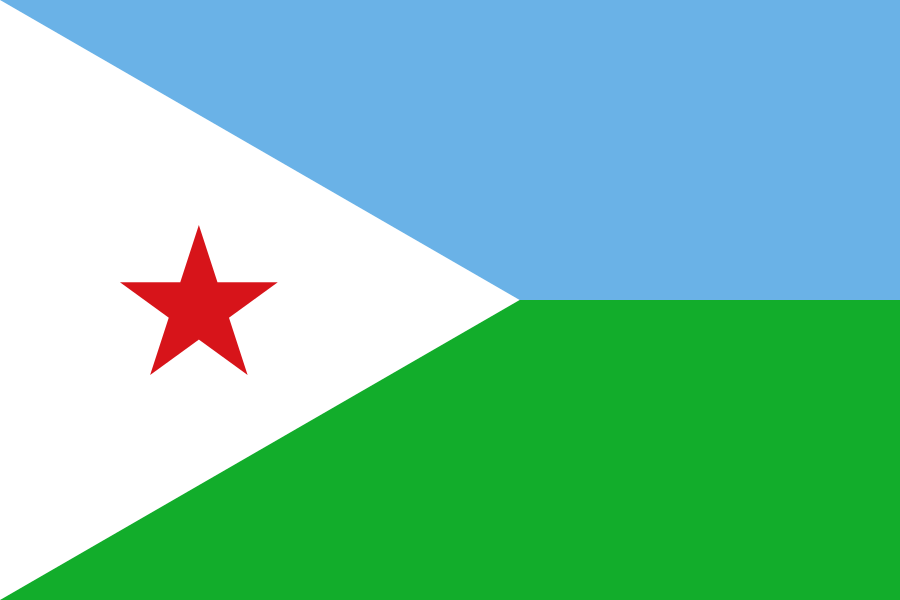
The flag of Djibouti features two horizontal bands of light blue and light green, with a white isosceles triangle at the hoist. The light blue represents the sea and the sky, while the green symbolizes the earth and the lush vegetation of the nation. The white triangle stands for peace, and the centered five-pointed red star represents unity among the five regions inhabited by Somali and Afar people. This design was officially adopted upon the country's independence from France in 1977.
Emblem history
The national emblem of Djibouti was adopted in 1977 and is framed by two branches of laurel, which represent victory and the pride of the nation. In the center, a vertical spear is positioned behind a traditional shield, symbolizing the readiness of the people to defend their independence. This central motif is flanked by two hands holding large knives, representing the two main ethnic groups, the Issa and the Afar, working together. A red five-pointed star sits at the top of the emblem, mirroring the star found on the national flag and signifying the core value of unity.