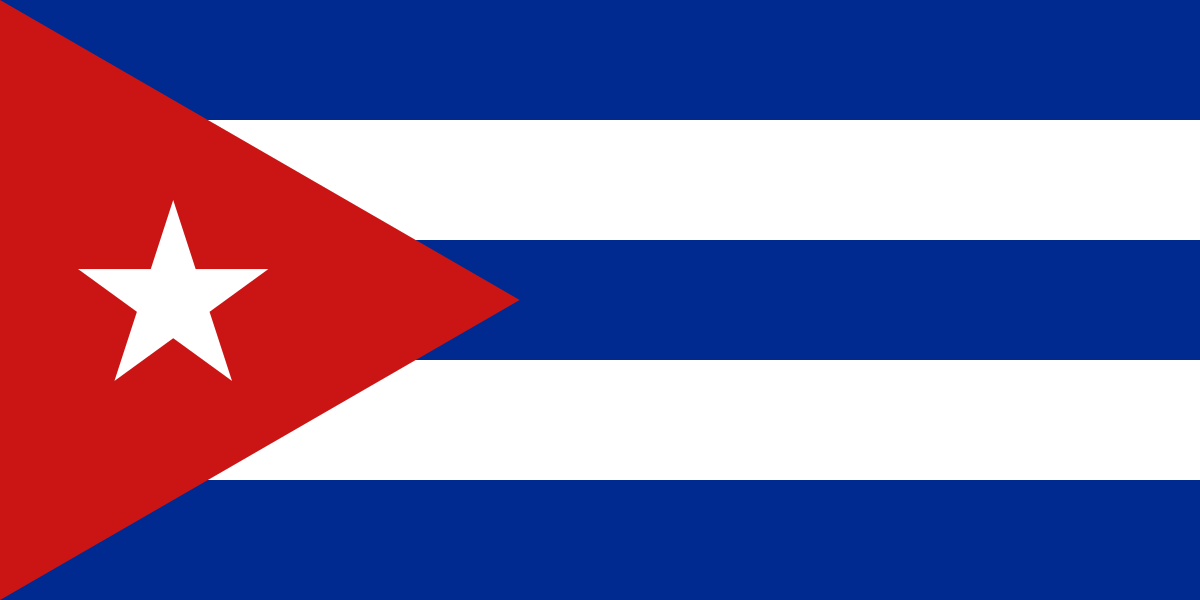
Cuba
Cuba
- Capital
- Havana
- Population
- 11,326,616
- Region
- Americas
- Languages
- Spanish
Cuba is home to the world's smallest bird, the Bee Hummingbird, which measures just over two inches in length and weighs less than a penny. The nation also boasts a remarkably high literacy rate and a specialized health system that exports thousands of medical professionals to assist in global humanitarian crises. Additionally, the streets are famous for a 'living museum' of vintage 1950s American cars, which remain in use due to decades of import restrictions and local mechanical ingenuity.
Currency
The official currency is the Cuban Peso, identified by the ISO code CUP. In a unique economic experiment that lasted for nearly three decades, Cuba operated a dual-currency system with a secondary 'Convertible Peso' (CUC) pegged to the US dollar before unifying back to a single currency in 2021.
Flag symbolism
The three blue stripes represent the three military districts into which the island was divided during the colonial period. Two white stripes symbolize the purity of the independence movement's ideals and the light of liberty. The red triangle is a masonic symbol meaning liberty, equality, and fraternity, while the single white star, known as 'La Estrella Solitaria,' represents the absolute freedom of the people.
Emblem history
The coat of arms, known as the Shield of the Royal Palm, features a golden key positioned between two rocky capes to represent Cuba's strategic role as the 'Key to the Gulf.' The rising sun in the background symbolizes the birth of a new nation, while the vertical stripes on the lower left mirror the design of the national flag. A central royal palm tree stands in the foreground, chosen for its resilience and ability to withstand the strongest tropical storms.