Cook Islands
Cook Islands
- Capital
- Avarua
- Population
- 18,100
- Region
- Oceania
- Languages
- English
Despite being an independent nation in free association with New Zealand, the Cook Islands uses a unique currency including a triangular two-dollar coin and a three-dollar banknote. The three-dollar note features a legendary local heroine named Ina riding a shark across the ocean, which is a scene from one of the island's most famous myths. This currency is only legal tender within the islands and is highly prized by international numismatists for its unusual shapes and vibrant mythological artwork. The islands are also pioneer advocates for marine conservation, having established one of the world's largest multi-use maritime parks known as Marae Moana.
Currency
The official currency is the New Zealand Dollar (NZD), though the nation also mints its own unique local coins and banknotes for domestic use. One of the most famous pieces of local currency is the triangular two-dollar coin, which is highly sought after by collectors worldwide for its unconventional shape.
Flag symbolism
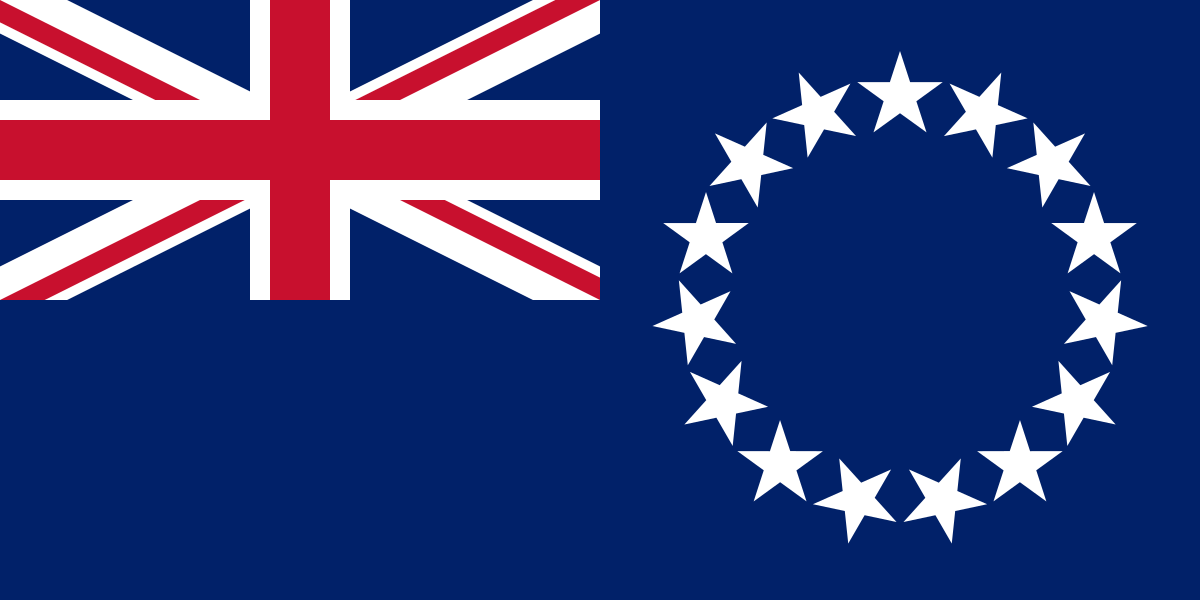
The flag features a Blue Ensign base representing the vast Pacific Ocean and the peaceful nature of its inhabitants. In the fly, a circle of fifteen equal-sized white stars represents the fifteen distinct islands that make up the nation and the equality of its people. The circular arrangement symbolizes the unity and strength of the islands, functioning together as a cohesive social and political entity. While the Union Jack in the canton acknowledges historical ties to the British Commonwealth, the overall design highlights the indigenous pride of the Polynesian voyaging tradition.
Emblem history
The Cook Islands coat of arms features a central shield flanked by a flying fish, or maroro, and a White Tern representing the sea and the sky. On the shield, fifteen white stars are arranged in a circle, mirroring the national flag's motif of unity across the archipelago. Topping the shield is a feathered headdress, known as a 'pare kura', which serves as a symbol of traditional rank and the authority of the local chiefs. Below the shield, a scroll displays the nation's name, while the entire design blends traditional Polynesian iconography with European heraldic traditions established in 1980.