Côte d'Ivoire
Côte d'Ivoire
- Capital
- Yamoussoukro
- Population
- 26,378,275
- Region
- Africa
- Languages
- French
The nation is home to the Basilica of Our Lady of Peace in Yamoussoukro, which is recognized by Guinness World Records as the largest church in the world. Its massive dome and plaza were inspired by St. Peter's Basilica in Vatican City, though it was designed to slightly surpass its predecessor in both height and total area. Completed in 1989, the interior features thousands of square meters of intricate French stained glass and enough marble to cover several football fields. Despite its grandeur, the basilica remains a quiet site of pilgrimage surrounded by the country's equatorial greenery.
Currency
The official currency is the West African CFA franc, designated by the ISO code XOF. Originally established in 1945, it was tied to the French franc for decades and is currently pegged to the Euro, providing a unique level of exchange rate stability compared to many neighboring currencies.
Flag symbolism
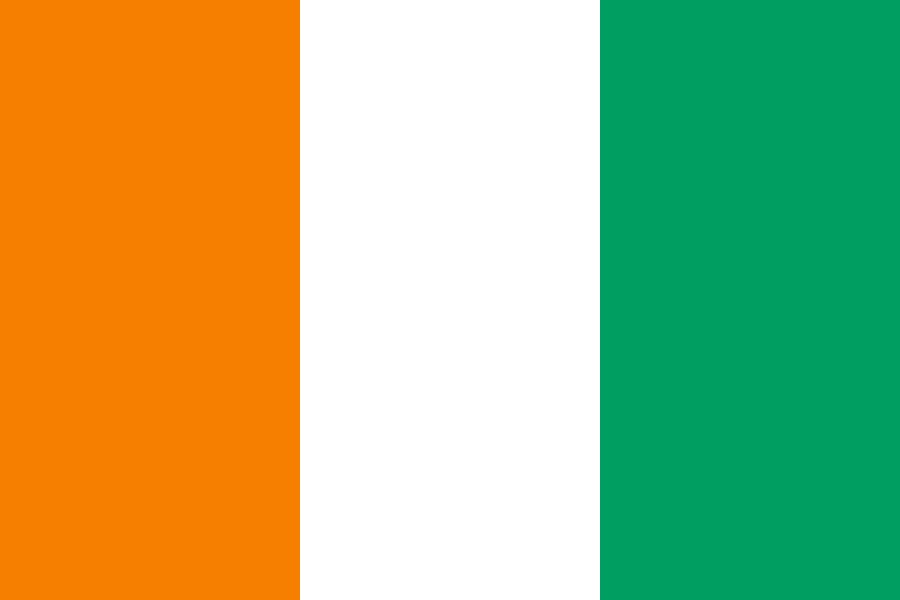
The flag features three vertical stripes of orange, white, and green, a design inspired by the French Tricolour but utilizing Pan-African and regional tones. The orange stripe represents the savannah grasslands of the north and the spirit of national growth. The central white stripe signifies peace, unity, and the purity of the country's ideals. The green stripe at the fly end symbolizes the lush coastal forests of the south and the hope for a prosperous future through the land's natural resources.
Emblem history
The coat of arms prominently features a silver elephant's head, which is the national animal and the historical namesake of the country. This elephant is set against a green shield, flanked by two golden palm trees that represent the importance of the agricultural sector and life itself. Above the shield, a golden sun with nine rays symbolizes a new era of independence and enlightenment. A scroll at the base displays the formal name of the republic, anchoring the design in a tradition established shortly before full sovereignty was achieved in 1960.