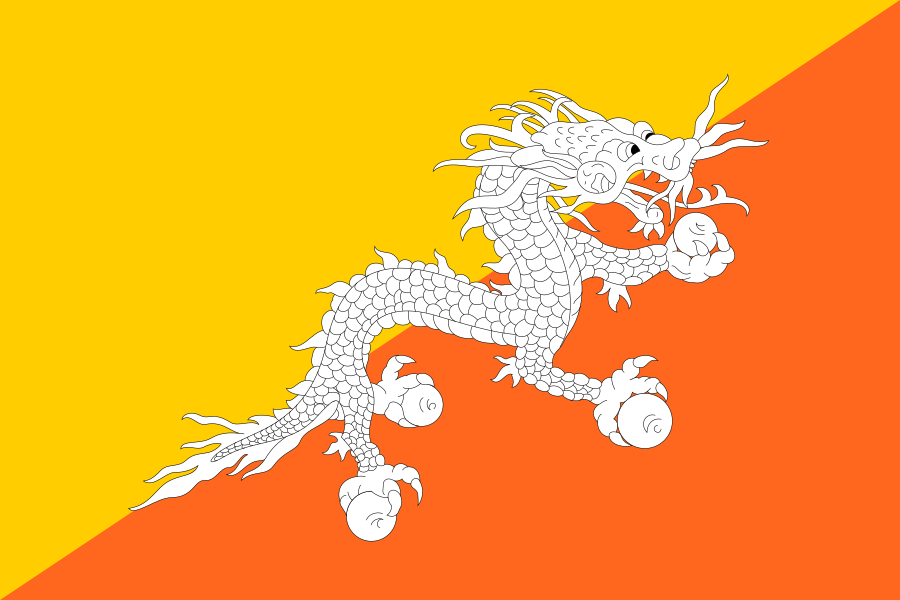
Bhutan
Bhutan
- Capital
- Thimphu
- Population
- 771,612
- Region
- Asia
- Languages
- Dzongkha
Bhutan remains the only country in the world that is carbon negative, meaning it absorbs more carbon dioxide than it produces. This achievement is protected by the national constitution, which mandates that at least sixty percent of the country's land must remain under forest cover for all time. Beyond environmental metrics, the nation famously prioritizes Gross National Happiness over Gross Domestic Product as its primary measure of progress. This unique philosophy integrates sustainable development with cultural preservation and emotional well-being.
Currency
The official currency of Bhutan is the Ngultrum, identified by the ISO code BTN. Before its introduction in 1974, Bhutan primarily used a system of barter or traded using Indian Rupees and various copper and silver coins.
Flag symbolism
The flag is divided diagonally into yellow and orange fields, representing the authority of the king and the spiritual practice of Buddhism respectively. Centered along the dividing line is the Druk, or Thunder Dragon, which is white to symbolize the purity of the people's thoughts and deeds. The dragon holds jewels in its claws to represent the wealth and security of the nation. Its snarling mouth reflects the strength of the deities committed to protecting the kingdom.
Emblem history
The national emblem of Bhutan is contained within a circle and features two crossed vajras atop a lotus flower, symbolizing the harmony between secular and religious power. These ritual thunderbolts represent the indestructibility of enlightenment and are flanked by two dragons that signify the name of the kingdom. At the top of the emblem sits a sovereign jewel, denoting the supreme authority of the Buddhist philosophy. This design was formally codified in the mid-20th century to incorporate traditional Himalayan heraldic elements into a unified state seal.