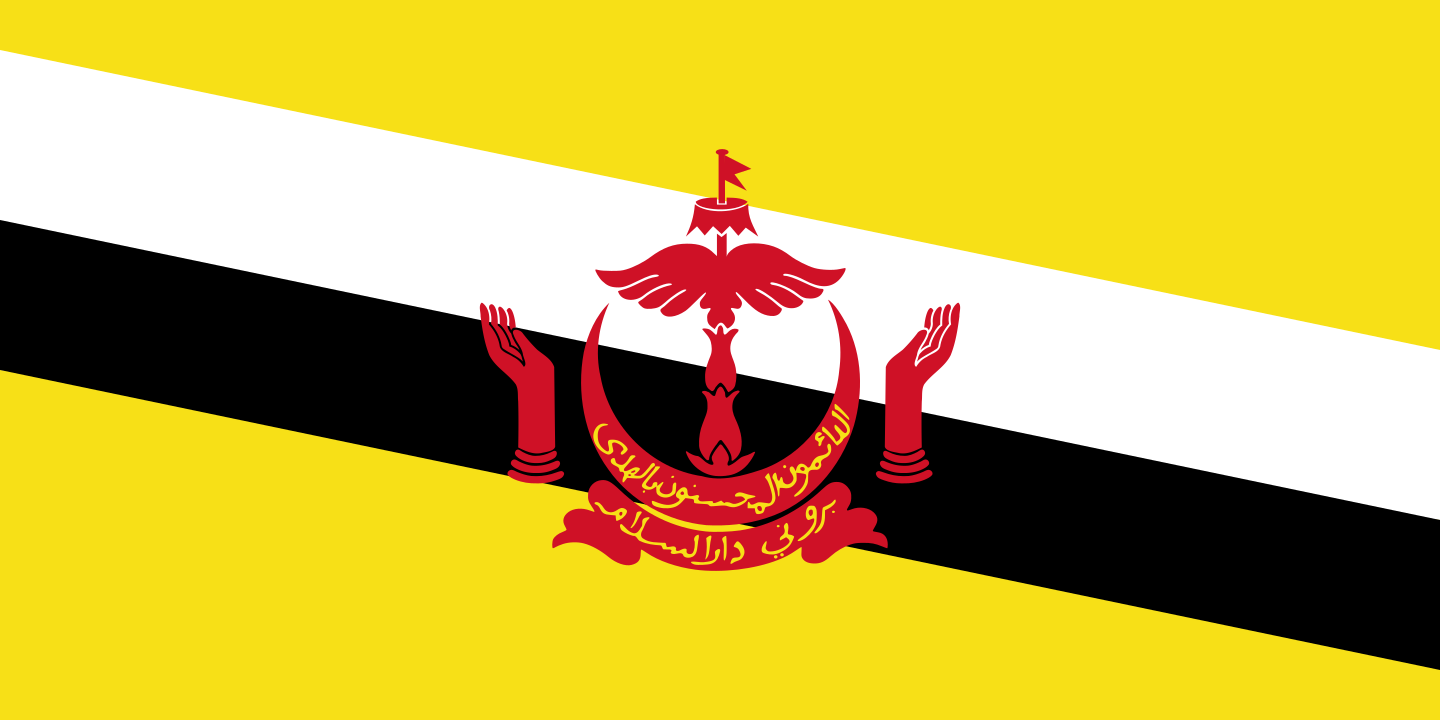
Brunei Darussalam
Brunei Darussalam
- Capital
- Bandar Seri Begawan
- Population
- 437,483
- Region
- Asia
- Languages
- Malay
Brunei is home to Kampong Ayer, the world's largest water village, where thousands of residents live in houses built on stilts over the Brunei River. This sprawling settlement functions as a complete self-contained city with its own floating schools, fire stations, and mosques. Visitors often call it the Venice of the East, but its history predates European exploration of the region by centuries. The village remains a vibrant cultural heart of the nation, blending traditional wooden architecture with modern conveniences like high-speed internet.
Currency
The official currency is the Brunei Dollar (BND), which exists under a unique Currency Interchangeability Agreement with the Singapore Dollar. This arrangement has been in place since 1967, meaning that the currencies are custom-accepted at par in both countries, allowing them to circulate freely across each other's borders.
Flag symbolism
The yellow field represents the Sultan of Brunei, as yellow is the traditional color of royalty in Southeast Asian cultures. The black and white diagonal stripes represent the country's two chief ministers, who traditionally advise the monarch in state affairs. Superimposed in the center is the national emblem in red, which symbolizes the commitment of the government to its people. The upward-pointing crescent signifies Islam, the state religion, while the hands on either side symbolize the government's pledge to preserve the welfare of the citizenry.
Emblem history
The national emblem of Brunei was adopted in 1959 and is rich with Islamic and monarchical symbolism. At its top, a regal umbrella known as the Payung Ubor-Ubor represents the Sultanate’s hereditary monarchy. The crescent below features the national motto inscribed in Arabic script, which translates to 'Always in service with God's guidance.' The central mast and wings represent justice, peace, and prosperity, while the two grasping hands at the base were added later to emphasize the state's duty to provide protection and serenity.