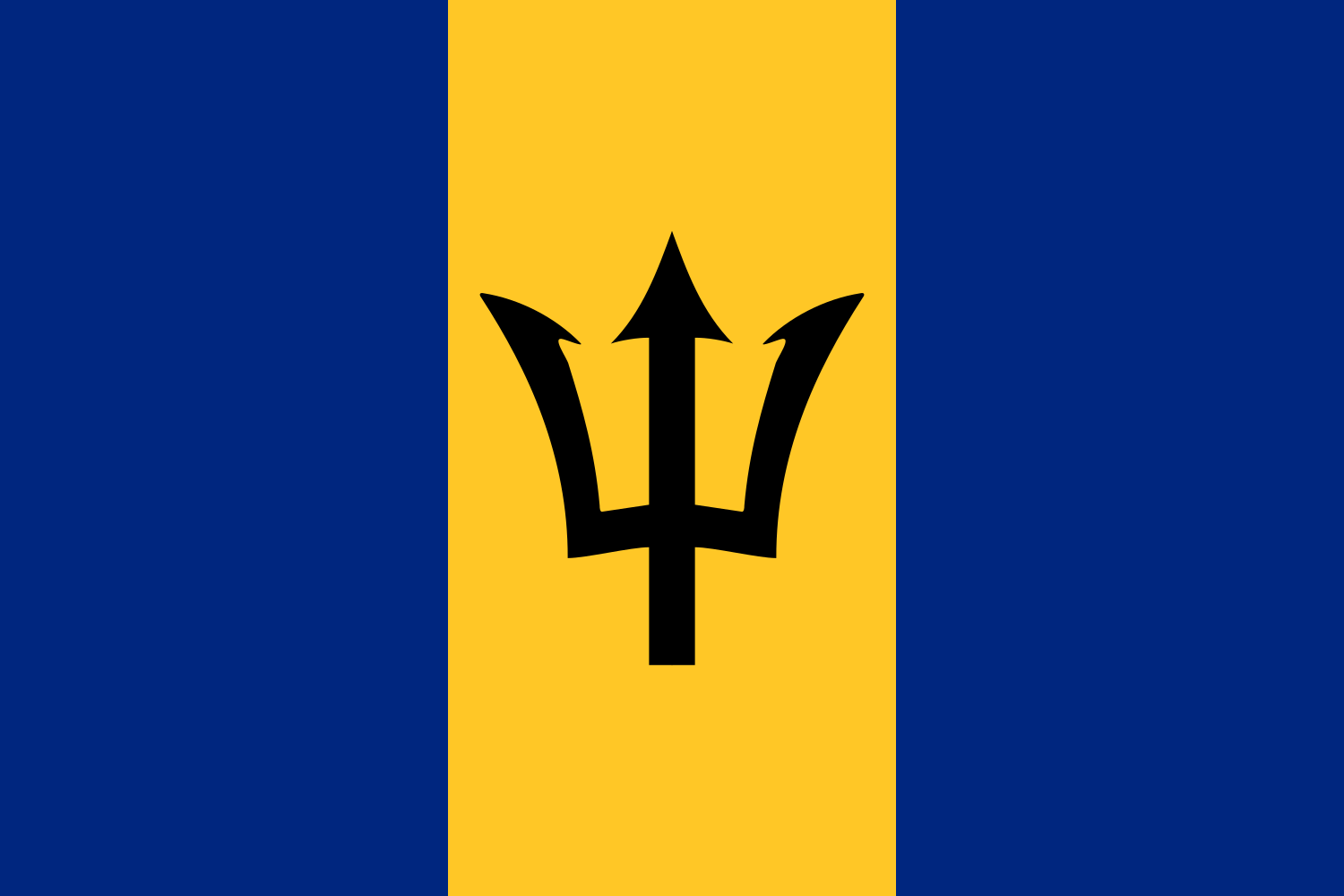
Barbados
Barbados
- Capital
- Bridgetown
- Population
- 287,371
- Region
- Americas
- Languages
- English
Despite its relatively small size, Barbados is the birthplace of rum, with the Mount Gay distillery established in 1703 as the world's oldest commercial rum producer. The island was also the only foreign land ever visited by a young George Washington, who stayed at a residence in Bridgetown that is now a heritage site. Additionally, the island is famously known as the Land of the Flying Fish because the species is a primary culinary staple and can glide over the water for up to 45 seconds to escape predators.
Currency
The official currency is the Barbadian dollar, denoted by the ISO code BBD. It has been pegged to the United States dollar at a fixed rate of 2:1 since 1975, providing significant economic stability for the island's international trade and tourism sectors.
Flag symbolism
The flag features a vertical triband of ultramarine and gold, representing the surrounding sea, the sky, and the golden sands of the island beaches. At the center is a black trident head, which is modeled after the staff held by the mythical sea god Neptune. The trident head is intentionally broken at the shaft to symbolize the island’s break from its colonial past as a British dependency. Each of the three points of the trident is meant to represent the three principles of democracy: government of, for, and by the people.
Emblem history
The Barbados coat of arms features a shield supported by a dolphin and a pelican, representing the fishing industry and the historic Pelican Island. On the shield, a majestic bearded fig tree stands as a reference to the island's name, which was derived from the Portuguese term 'Los Barbados' meaning 'the bearded ones.' Two Pride of Barbados flowers are positioned in the upper corners, serving as the national floral emblem. The crest showcases the forearm of a Barbadian holding two crossed sugar cane stalks, highlighting the historical importance of the sugar industry to the nation's economy.