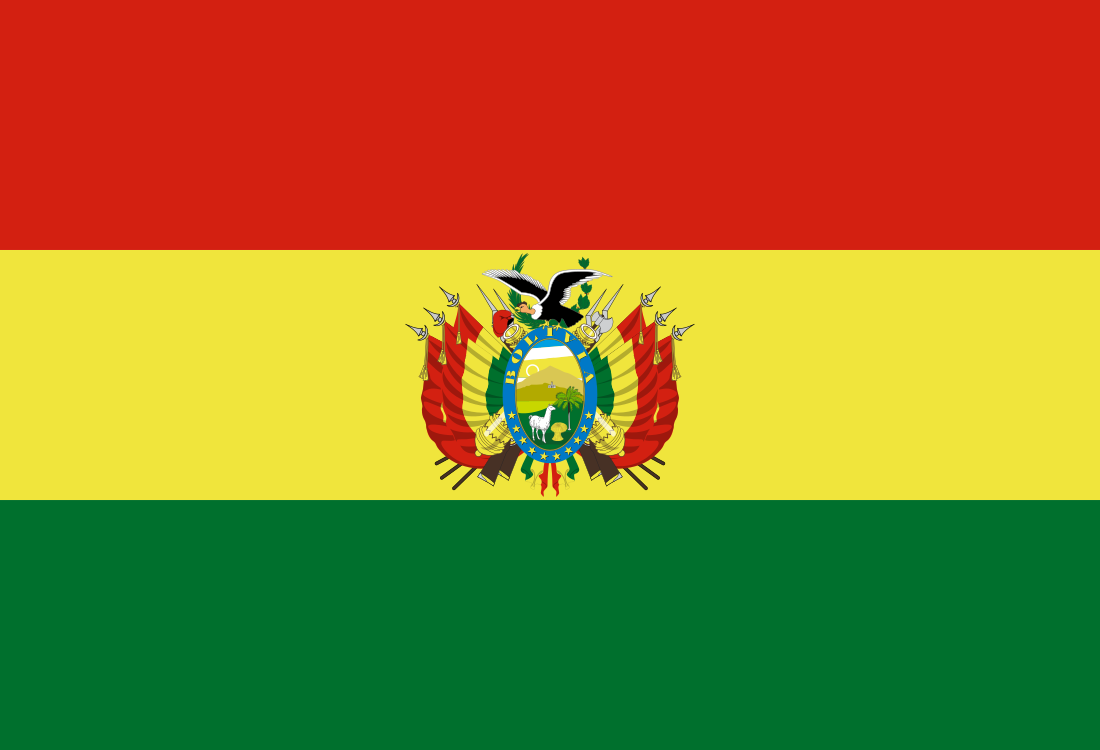
Bolivia (Plurinational State of)
Bolivia (Plurinational State of)
- Capital
- Sucre
- Population
- 11,673,029
- Region
- Americas
- Languages
- Spanish, Aymara, Quechua
Bolivia is home to the world's largest salt flat, the Salar de Uyuni, which contains over 10 billion tons of salt and holds roughly half of the planet's lithium reserves. The surface is so incredibly flat and reflective that NASA frequently uses it to calibrate satellite sensors during the rainy season when a thin layer of water creates a perfect mirror. Additionally, the city of La Paz is famous for its 'Traffic Zebras,' young people dressed in full zebra costumes who help children cross streets and educate drivers on road safety. This unique social program has become a beloved cultural icon and has significantly reduced traffic accidents in the congested highland city.
Currency
The official currency is the Boliviano, identified by the ISO code BOB. Originally introduced in 1864, the currency has seen various iterations, including a period in the 1980s where hyperinflation was so severe it led to the creation of the 'nuevo boliviano' to stabilize the national economy.
Flag symbolism
The national flag of Bolivia features three horizontal bands of red, yellow, and green, which were officially adopted in 1851. The top red stripe represents the bravery of the soldiers who fought for independence and the blood of the nation's heroes. The middle yellow band symbolizes the country's immense mineral wealth and the richness of its natural resources. The bottom green band stands for the fertility of the land and the vast agricultural potential of the diverse ecological regions.
Emblem history
The central coat of arms features a shield surrounded by olive and laurel branches, symbolizing peace and triumph over adversity. Inside the oval, the iconic Mount Potosí is depicted, representing the historical importance of silver mining to the nation's identity and economy. Ten gold stars at the base of the seal honor the nine current departments of Bolivia plus the Litoral department, which was lost to Chile in the 19th century. A majestic Andean condor sits atop the shield, signifying the pursuit of liberty and the sovereign power of the people.