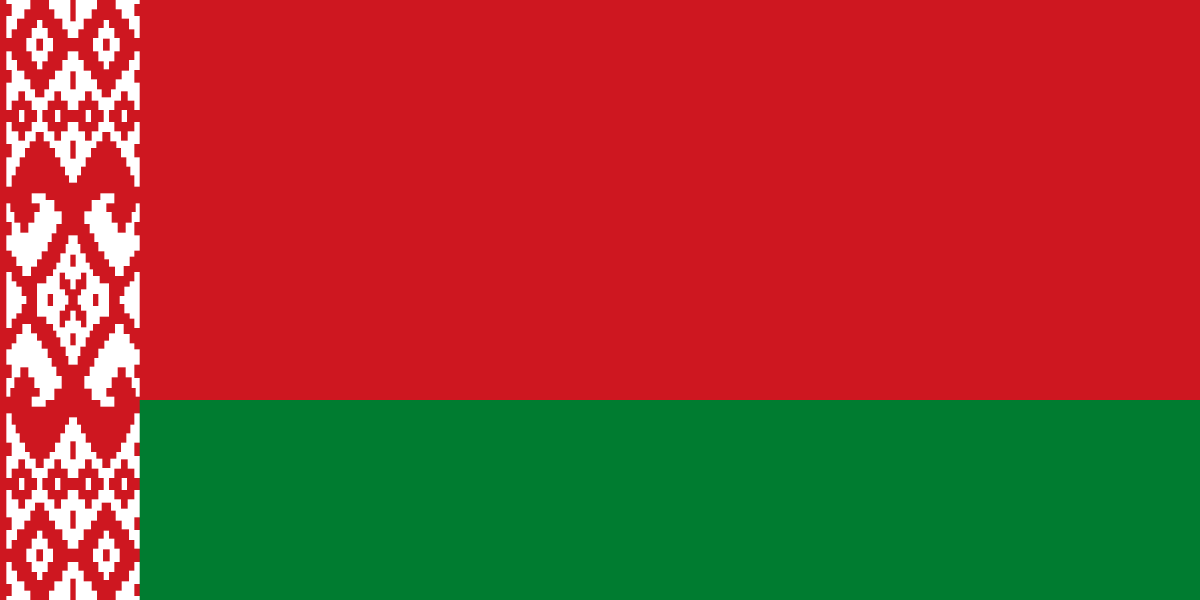
Belarus
Belarus
- Capital
- Minsk
- Population
- 9,398,861
- Region
- Europe
- Languages
- Belarusian, Russian
Belarus is home to the largest land mammals in the European continent, the European bison, which were successfully brought back from the brink of extinction. The country is often referred to as the 'Lungs of Europe' because approximately forty percent of its landscape is covered by dense, pristine forests. This includes the notable Belovezhskaya Pushcha, a UNESCO World Heritage site and one of the last remaining parts of the primeval forest that once stretched across the European Plain. Interestingly, the nation also has a deep connection to technology, having been the birthplace of the popular messaging app Viber and the game World of Tanks.
Currency
The official currency is the Belarusian Ruble, identified by the ISO code BYN. A unique historical aspect of the currency was the early 1990s series which featured various local animals like hares and squirrels, leading locals to affectionately nickname the money 'zaichiki' or 'little hares'.
Flag symbolism
The red stripe at the top represents the historical battles of the Belarusian forces, including the victory at the Battle of Grunwald and the struggles of World War II. The green stripe symbolizes the country's vast forest cover and hopeful outlook for the future development of the nation. Most distinctively, the hoist side features a red-on-white decorative pattern known as 'rushnyk,' which is a traditional folk embroidery style. This pattern was originally designed in 1917 and signifies the cultural heritage, unity, and spiritual continuity of the Belarusian people.
Emblem history
The current national emblem of Belarus was adopted following a 1995 referendum and is closely modeled after the Soviet-era insignia used when it was a constituent republic. It features a golden map of Belarus superimposed over the rays of a rising sun, resting above a globe that symbolizes international solidarity. The central elements are framed by stalks of rye intertwined with clover and flax flowers, representing the agricultural wealth and productivity of the land. A red and green ribbon, matching the colors of the national flag, wraps around the grain stalks and meets at the bottom, beneath a five-pointed red star that sits at the top of the design.