Burkina Faso
Burkina Faso
- Capital
- Ouagadougou
- Population
- 20,903,278
- Region
- Africa
- Languages
- French, Fula
Burkina Faso is known as the 'Land of Upright People,' a name created by revolutionary leader Thomas Sankara by combining words from the Moore and Dioula languages. The country is a global hub for African cinema, hosting the biennial FESPACO film festival which is the largest of its kind on the continent. It is also home to the mysterious Ruins of Loropéni, a UNESCO World Heritage site consisting of ancient stone walls that date back at least a thousand years. Unlike many neighbors, the country has a deep-rooted tradition of equestrian culture, and the national football team is even nicknamed 'The Stallions.'
Currency
The official currency is the West African CFA franc, identified by the ISO code XOF. Originally pegged to the French franc upon its creation in 1945, it is now pegged to the Euro, providing a unique level of exchange rate stability among its member states in the region.
Flag symbolism
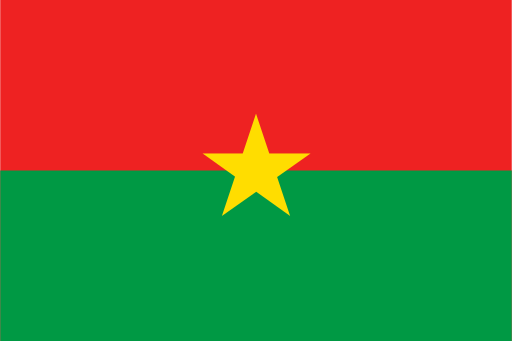
The national flag consists of two equal horizontal bands of red and green with a yellow five-pointed star centered in the middle. The red stripe represents the socialist revolution and the blood shed by martyrs during the struggle for independence. The green band signifies the country's agricultural wealth and the preservation of its natural resources. The yellow star acts as a guiding light for the revolution and symbolizes the country's mineral richness. This design was adopted in 1984 as a departure from the previous colonial-era tricolor.
Emblem history
The current coat of arms, adopted in 1997, features a shield based on the national flag held by two white stallions. These horses represent the nobility of the Burkinabé people and trace back to the legendary origins of the Mossi Empire. Behind the shield, two crossed spears and an open book symbolize the defense of the nation and the pursuit of knowledge. A banner at the bottom displays the national motto, 'Unité, Progrès, Justice,' which replaced the revolutionary slogans of the 1980s. The design intentionally mirrors the country's history of balancing traditional warrior heritage with modern educational aspirations.