Benin
Benin
- Capital
- Porto-Novo
- Population
- 12,123,198
- Region
- Africa
- Languages
- French
Benin is widely recognized as the spiritual birthplace of Vodun, a religion often misunderstood through Western pop culture but centered on ancestral spirits and the forces of nature. The city of Ouidah serves as a primary hub for these traditions and hosts an annual national festival that draws practitioners from across the globe. Visitors can still explore the Temple of Pythons, where dozens of sacred royal pythons are protected and venerated as symbols of strength and peace. This deep cultural heritage remains an integral pillar of daily social and spiritual life for many Beninese people.
Currency
The official currency is the West African CFA franc, identified by the ISO code XOF. Interestingly, this currency is part of a monetary union where the banknotes feature unique identification letters to indicate which specific country issued them, with the letter 'B' traditionally assigned to Benin.
Flag symbolism
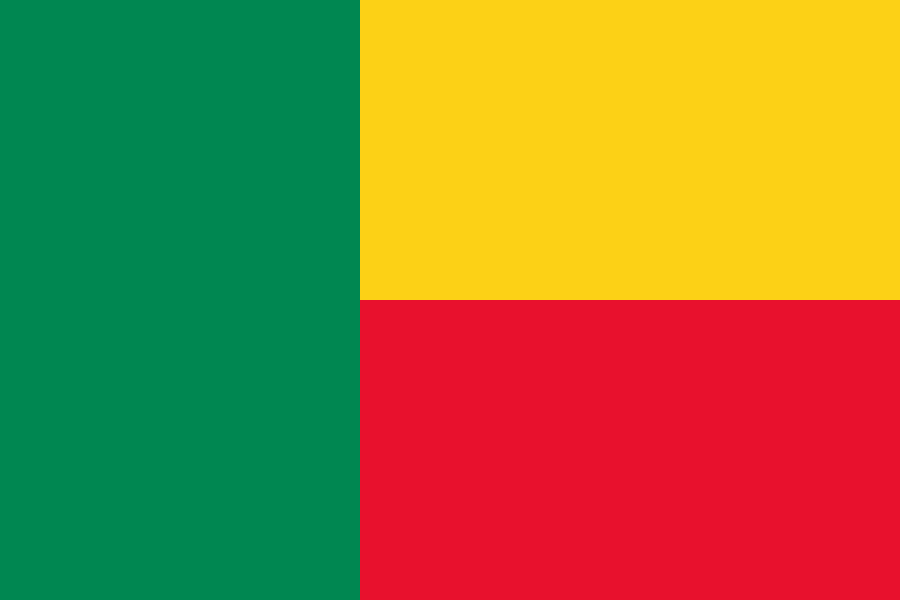
The national flag of Benin features the pan-African colors of green, yellow, and red to signify solidarity with the continent's independence movements. The vertical green stripe on the hoist side symbolizes the hope of a brand new democracy and the lushness of the nation's natural landscape. The horizontal yellow stripe represents the country's hidden treasures and its preserved wealth, while the red stripe signifies the courage and blood sacrifice of those who fought for freedom. Together, these colors reflect the aspirations of the people following the transition from the colonial name of Dahomey.
Emblem history
The coat of arms of Benin features a shield supported by two leopards, which are the national animals symbolizing the power and courage of the ancient kings. At the heart of the shield are four quadrants depicting a castle representing the history of the region, the Star of Benin, a palm tree for the nation's economy, and a ship symbolizing the arrival of European explorers. Topping the shield are two cornucopias filled with corn, representing the agricultural fertility and abundance of the land. The motto displayed on the ribbon at the bottom, 'Fraternité, Justice, Travail', was reinstated in 1990 after the country moved away from a period of Marxist-Leninist rule.