Burundi
Burundi
- Capital
- Gitega
- Population
- 11,890,781
- Region
- Africa
- Languages
- French, Kirundi
Burundi is home to the legendary Gustave, a massive Nile crocodile rumored to be over 18 feet long and weighing more than a ton. Local folklore and scientific trackers have documented this formidable predator in Lake Tanganyika for decades, though he hasn't been spotted recently. The country is also world-renowned for its 'Royal Drummers of Burundi,' a group that performs complex, synchronized rhythms on traditional wooden drums that are considered sacred. This drumming tradition has been recognized by UNESCO as intangible cultural heritage and once served as a core part of royal court ceremonies.
Currency
The official currency is the Burundian Franc, identified by the ISO code BIF. Since its introduction in 1964 following the dissolution of the monetary union with Rwanda, the currency has moved from being pegged to the Belgian Franc to a floating exchange rate system.
Flag symbolism
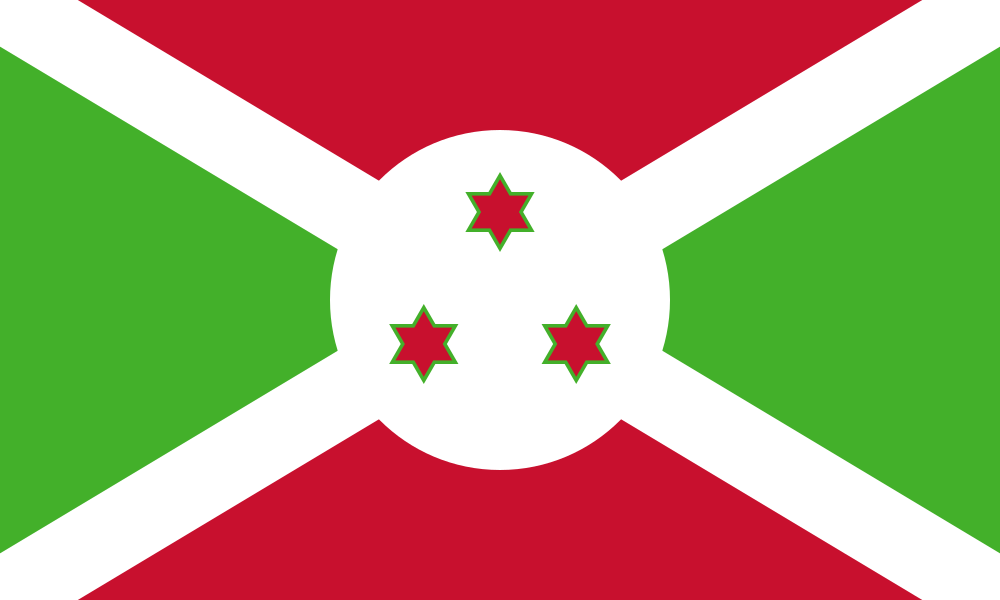
The flag features a white saltire that divides the field into four alternating panels of red and green. Red symbolizes the suffering and blood shed during the struggle for independence, while green represents hope for future development and the country's natural fertility. The white color signifies peace, a central aspiration for the nation's harmony. In the center, a white disk contains three red six-pointed stars outlined in green, which represent the three major ethnic groups of the country—the Hutu, Tutsi, and Twa—working together towards national unity.
Emblem history
The coat of arms of Burundi features a traditional shield centered around a stylized lion's head, which represents the authority and strength of the former monarchy. Behind the shield, three traditional African spears are crossed, symbolizing the nation's readiness to defend its sovereignty and its historical warrior traditions. Below the shield is a scroll displaying the national motto: 'Unité, Travail, Progrès,' reflecting the country's aspirations toward unity and economic growth since achieving independence in 1962. This emblem was adopted shortly after the country became a republic, blending ancestral heraldry with modern political ideals.