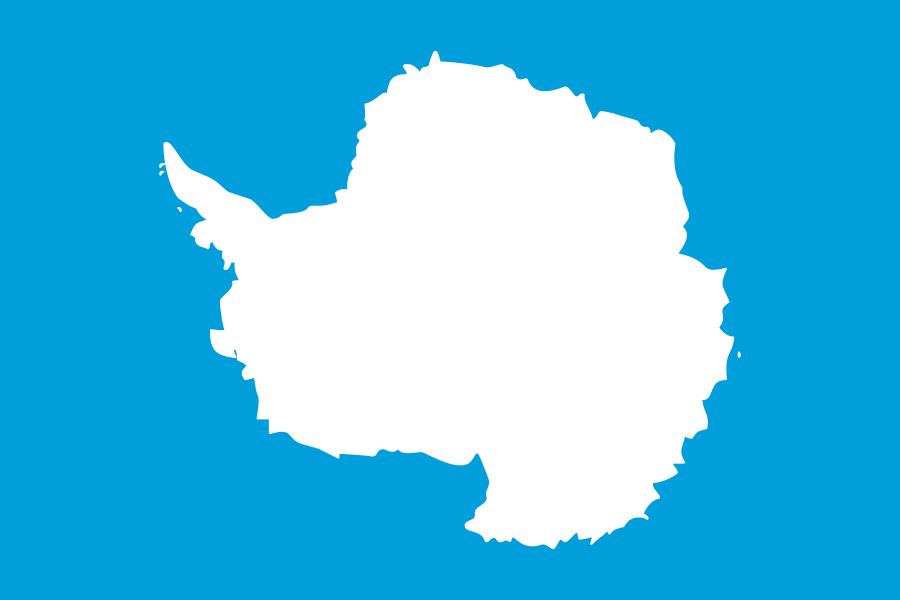
Antarctica
Antarctica
- Capital
- —
- Population
- 1,000
- Region
- Polar
- Languages
- English, Russian
Despite being covered in ice, Antarctica is officially the driest place on Earth, with some areas known as the Dry Valleys having seen no rain or snow for millions of years. It is also the only continent without a native species of ants, and it contains roughly seventy percent of the planet's fresh water locked in its massive ice sheets. Interestingly, deep beneath the frozen surface lie over four hundred subglacial lakes that remain liquid due to the pressure of the ice above and geothermal heat from below.
Currency
The region does not have an official legal tender and uses the currencies of visiting nations, though the unofficial 'Antarctican Dollar' (no ISO code) is produced as a collectible souvenir. These notes are issued by the Antarctica Overseas Exchange Office and are unique because they are often printed on high-quality polymer with serial numbers for collectors.
Flag symbolism
The most widely recognized design is the True South flag, which features horizontal stripes of navy and light blue representing the long days and nights of the poles. In the center, a white peak represents the snowy mountains and icebergs that define the landscape, casting a shadow that forms a compass needle pointing south. This geometry creates a triangular shape that symbolizes the spirit of exploration and the shared scientific focus of the Antarctic Treaty nations.
Emblem history
Antarctica has no single governing body, so the emblem of the Antarctic Treaty Secretariat serves as its most formal symbol. It features a simplified map of the continent in white, centered over a blue background that mirrors the United Nations color scheme to denote neutrality. The surrounding circular lines represent the global collaborative nature of the Antarctic Treaty, which preserves the land exclusively for peaceful scientific purposes and international cooperation.