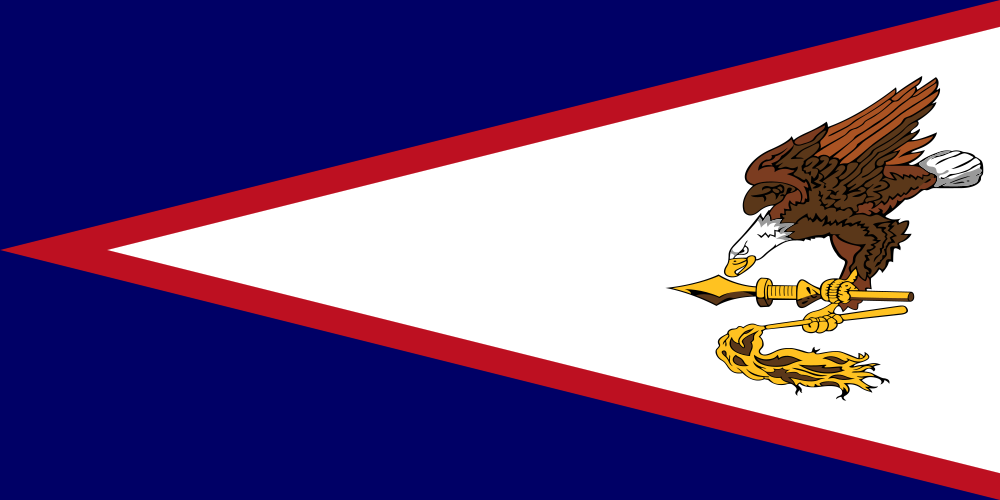
American Samoa
American Samoa
- Capital
- Pago Pago
- Population
- 55,197
- Region
- Oceania
- Languages
- English, Samoan
American Samoa has the highest rate of military enlistment of any U.S. state or territory, with many locals viewing service as a high-honor career path. Interestingly, the territory is the only place in the United States where the residents are considered non-citizen nationals, meaning they have U.S. passports but cannot vote in presidential elections. It is also home to the National Park of American Samoa, which protects the only paleotropical rainforest in the United States and serves as a vital sanctuary for the endangered Samoan fruit bat.
Currency
The official currency is the United States Dollar (USD). Before the formal establishment of the current monetary system, the islands relied on a complex barter economy where finely woven mats, known as 'ie toga', served as a primary form of high-value cultural currency and wealth.
Flag symbolism
The flag features a white triangle pointing towards the fly, bordered by red and set against a large blue field, which incorporates the traditional national colors shared with the United States. A prominent brown and gold bald eagle is depicted flying toward the hoist, representing the territory's relationship with the U.S. and its protection. The eagle holds a fly-whisk (fue) and a war club (uatogi) in its talons, which symbolize the wisdom of traditional Samoan chiefs and the power of the state respectively.
Emblem history
The official seal of American Samoa is based on traditional Polynesian motifs and was officially adopted in 1975 to reflect the local concept of 'Fa'asamoa,' or the Samoan way of life. It features a fualogo, which is a traditional headdress worn by chiefs, and a kava bowl used during significant ceremonies to welcome guests and foster community bonds. Behind these items, a centered fly-whisk and a staff represent the traditional authority and eloquence of the talking chiefs who preserve the territory's oral history.