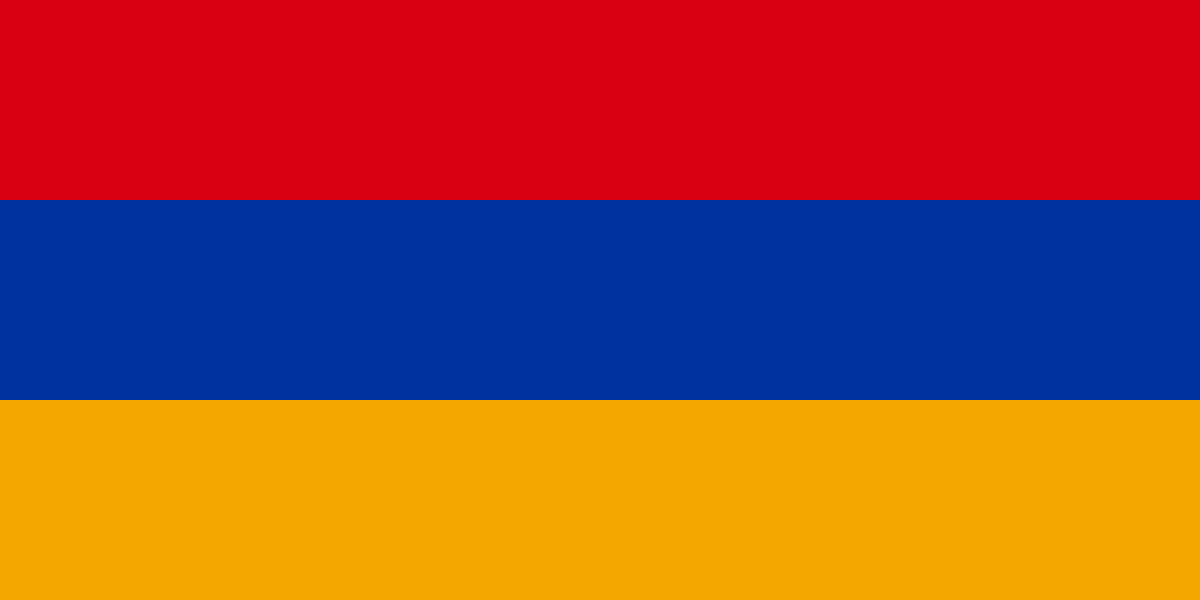
Armenia
Armenia
- Capital
- Yerevan
- Population
- 2,963,234
- Region
- Asia
- Languages
- Armenian
Armenia is often referred to as the cradle of viticulture, with the world's oldest known winery discovered in the Areni-1 cave complex. This archaeological site dates back over 6,000 years, containing a wine press, fermentation vats, and storage jars. In a separate area of the same cave, researchers also found the world's oldest leather shoe, preserved remarkably well by sheep dung. Today, the country continues this ancient tradition by producing unique wines from indigenous grape varieties that are not found anywhere else on Earth.
Currency
The official currency of Armenia is the dram, identified by the ISO code AMD. The term 'dram' translates to 'money' and originates from the Greek 'drachma,' a historical connection seen in silver coins used as early as the late 12th century. The modern dram was officially introduced in 1993, replacing the Soviet ruble following the country's independence.
Flag symbolism
The Armenian tricolor consists of three equal horizontal bands of red, blue, and orange. The red represents the Armenian Highland, the people's struggle for survival, and the maintenance of the Christian faith. The blue signifies the will of the people to live under peaceful skies, while the orange symbolizes the creative talent and hard-working nature of the nation. This specific color palette was adopted by the National Assembly in 1990 after the country regained independence from the Soviet Union.
Emblem history
The coat of arms features a shield supported by an eagle and a lion, symbols that have represented Armenian royalty for millennia. In the center of the shield is Mount Ararat, the national symbol, topped by Noah's Ark as described in biblical tradition. Surrounding the central image are the heraldic signs of four historic Armenian dynasties: the Artaxiad, Arsacid, Bagratid, and Rubenid houses. At the base, a broken chain represents the pursuit of freedom, while a bundle of wheat and a ribbon symbolize the industriousness and cultural heritage of the people.