Albania
Albania
- Capital
- Tirana
- Population
- 2,363,314
- Region
- Europe
- Languages
- Albanian
Albania is home to a unique cultural phenomenon known as the Burrnesha, or sworn virgins, where women take a vow of chastity to live and be treated as men in their society. This traditional practice allowed women to inherit family property and represent their households in social settings governed by ancient customary laws. Additionally, the country is dotted with over 170,000 concrete bunkers built during the 20th century, which have now been repurposed into museums, cafes, and art galleries. These structures serve as a physical reminder of a period of total isolation and defensive paranoia.
Currency
Albanian Lek (ALL). The Algerian dinar (DZD). Introduced in 1964, two years after independence, the dinar replaced the Algerian franc that had been used during French colonial rule. The name dinar derives from the ancient Roman silver coin the denarius, which circulated widely across North Africa during the Roman Empire. Algeria's currency has remained independent and is not freely convertible outside the country.
Flag symbolism
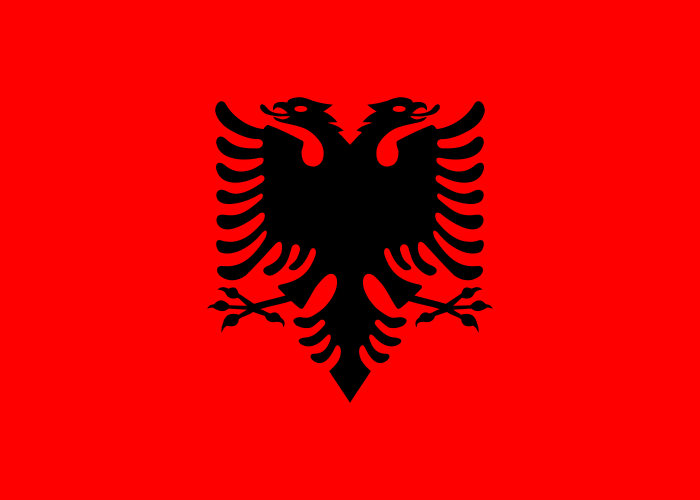
The Albanian flag is one of the most striking in the world — a black double-headed eagle on a vivid red background. The double-headed eagle is an ancient Byzantine symbol that Albania adopted as a national emblem, representing the country's position between East and West, and its historical role as a crossroads of civilisations. The eagle is said to derive from the seal of Gjergj Kastrioti Skënderbeu, the 15th century national hero who united Albanian princes against the Ottoman Empire. Red symbolises bravery, strength and the blood of those who fought for independence.
Emblem history
The national emblem of Albania features the same iconic double-headed eagle at its centre, topped by Skënderbeu's distinctive helmet — a golden helmet crowned with a goat's head, which he wore in battle against the Ottomans. This helmet has become one of the most recognisable symbols of Albanian identity and resistance. The emblem has changed several times throughout Albania's history — during the communist era the eagle was replaced with more ideological imagery — but since 1992 the country has returned to the eagle and helmet design, reclaiming its pre-communist national identity.