Angola
Angola
- Capital
- Luanda
- Population
- 32,866,268
- Region
- Africa
- Languages
- Portuguese
Angola is the native home of the Welwitschia mirabilis, a unique desert plant that can live for over 1,500 years. This botanical marvel survives in the arid Namib region by absorbing moisture from sea fogs through its only two leaves, which grow continuously throughout its life. It is so culturally significant that it appeared on the nation's currency and remains a symbol of resilience. Local folklore often regards the plant as a living fossil, as it has remained relatively unchanged since the Jurassic period.
Currency
The official currency is the Kwanza, identified by the ISO code AOA. It was first introduced in 1977 to replace the Portuguese Escudo and has undergone several re-denominations, including the 'Kwanza Reajustado,' to stabilize the economy during periods of high inflation.
Flag symbolism
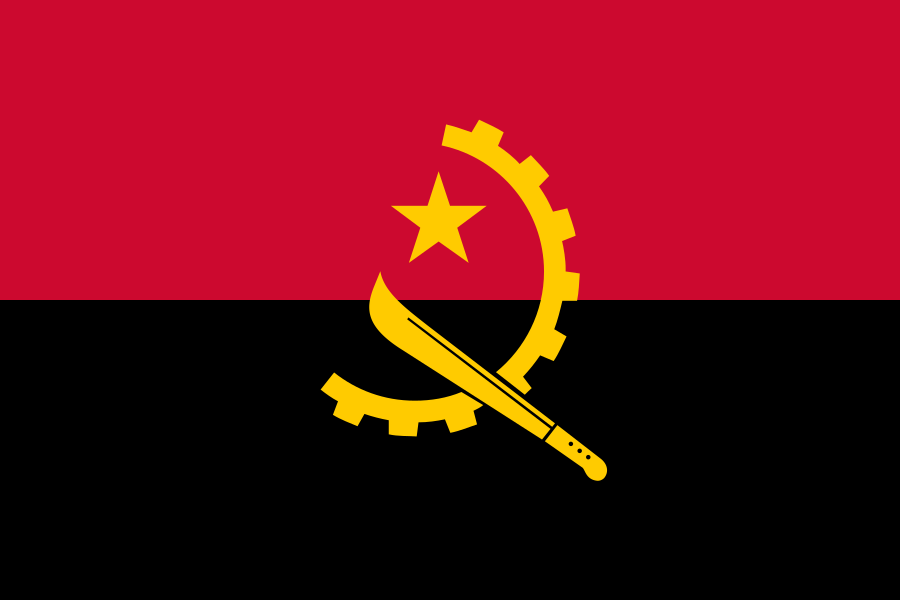
The national flag features two horizontal bands of red and black, which represent the blood shed during the struggle for independence and the African continent respectively. Centered in the middle is a yellow emblem consisting of a five-pointed star, a segment of a cogwheel, and a machete. The machete represents the peasantry and the armed struggle, while the cogwheel symbolizes the industrial workers. The star is a nod to international solidarity and progress, while the yellow color signifies the country's mineral wealth.
Emblem history
The national emblem of Angola heavily reflects socialist heraldry and the country's mid-20th-century revolutionary history. It features a central machete and hoe crossed over a cogwheel, symbolizing the union of agricultural and industrial laborers who sought independence. An open book placed at the bottom represents the importance of education and culture in building a new nation. The rising sun at the peak signifies a new beginning for the country, all framed by a wreath of cotton, coffee, and maize crops.